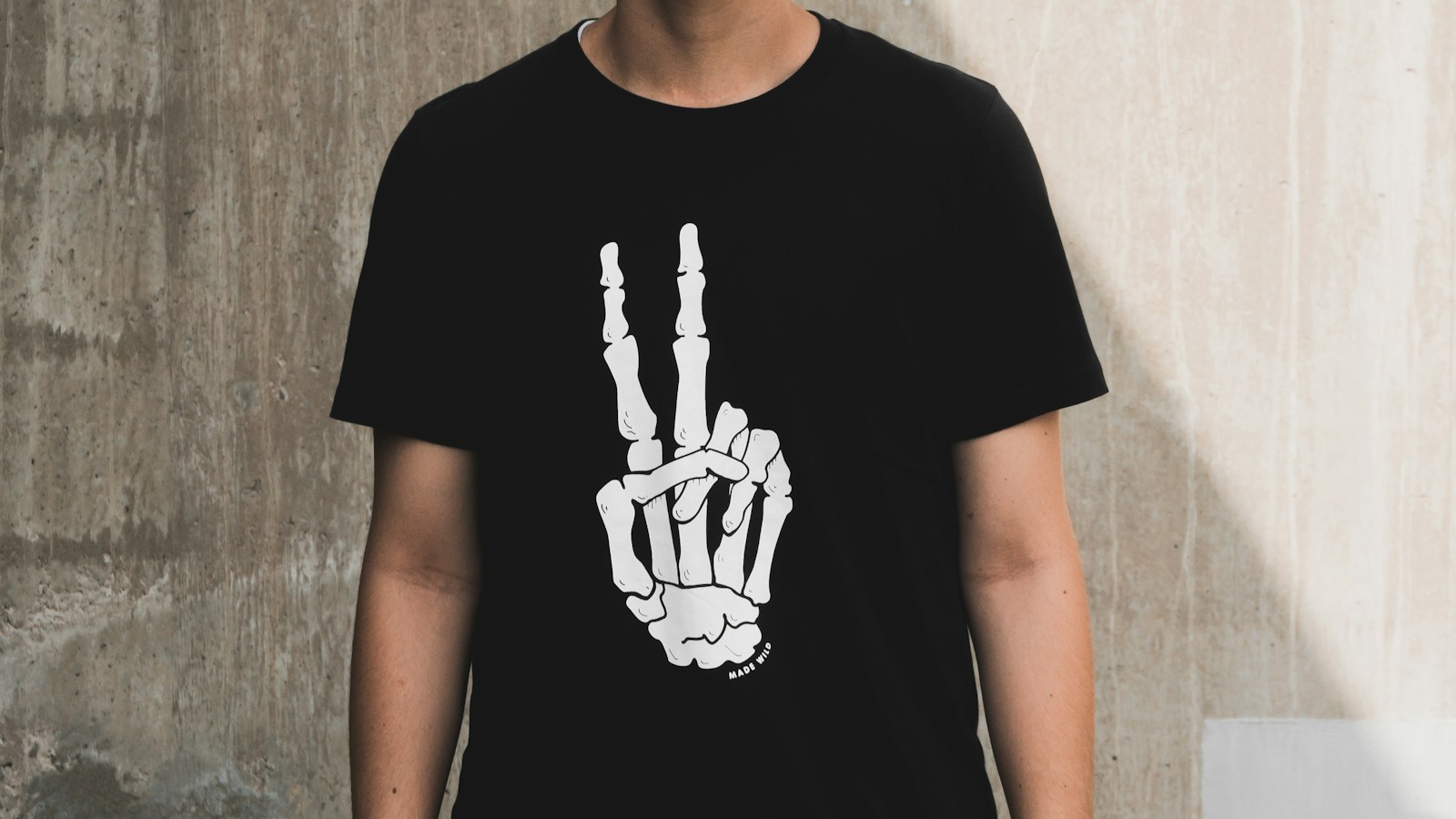
“Spiritual clothing for men” can mean a lot of different things.
For some people it’s religious attire. For others it’s yoga-inspired basics. For others it’s streetwear with meaning — something you wear as a reminder, a value signal, or a quiet anchor on a loud day. The point lands differently here because “Spiritual clothing for men (and anyone who wants a simple guide): symbols, fit, and feeling ” is solving a more particular question.
This guide is for the last category: spiritual clothing for men (and anyone who prefers menswear/unisex fits) that feels authentic, wearable, and respectful.
No fake enlightenment. No weird costume energy. Just practical choices that help you feel like yourself.
First: what counts as “spiritual clothing”?
In everyday fashion, “spiritual clothing” usually sits in one of these lanes:
1) symbols (lotus, third eye imagery, mandalas, sacred geometry-style patterns) 2) messages (calm, freedom, love, courage, mindfulness, truth) 3) practice clothing (comfortable pieces you wear for meditation, walking, yoga, journaling) 4) values-led clothing (designs and brands connected to conscious living, service, or activism)
The most important factor isn’t the category. It’s the intention you’re wearing it with — and whether it fits your actual life.
How to choose symbols respectfully (the non-preachy version)
Symbols can be meaningful. They can also be sacred in living traditions.
If you’re wearing a symbol-heavy piece, ask yourself:
- Do I know the basic meaning of this symbol?
- Is it connected to a specific religion or culture?
- Would I feel okay if someone from that tradition asked me why I’m wearing it?
- Am I using something sacred as a “cool graphic” without thinking?
You don’t have to be perfect. You just want to be honest and respectful.
If you want the lowest-friction option: choose pieces with messages aligned to values you practice (calm, courage, freedom, compassion) rather than borrowed sacred imagery you can’t explain.
Fit: the secret to “I actually wear this”
The biggest style win is repeatability.
Pick fits that you’ll want to wear on normal days: errands, travel, work-from-anywhere, casual nights, walks, studio days.
Common spiritual streetwear fits that work well:
- relaxed tees: not tight, not overly long
- hoodies/sweatshirts: classic or slightly oversized
- straight-leg pants: jeans or joggers that don’t feel restrictive
- simple outer layers: denim jacket, bomber, overshirt
If you’re between sizes, choose based on your “goal fit”:
- want a cleaner look? go closer to true size
- want a cozy streetwear look? size up slightly
There’s no universal rule. Your comfort is the rule.
Fabric: what matters (without overclaiming)
You don’t need to be a textile scientist, but a few things help:
- softness: if it irritates you, you won’t wear it
- breathability: especially for tees and base layers
- weight: heavier pieces can feel grounded and premium; lighter pieces layer better
- care: if it needs complicated care, it probably won’t survive your real life
If you’re buying less (a very spiritual practice, honestly), choose pieces that: hold up well and feel good repeatedly.
Style formulas: spiritual clothing that doesn’t feel like a costume
Here are simple outfit formulas that work in real life:
1) Message tee + neutral layer
- meaningful tee (words or subtle graphic)
- neutral overshirt/jacket
- jeans or relaxed trousers
The layer keeps it grounded and not overly “statement.”
2) Hoodie + clean basics
- hoodie
- straight jeans or joggers
- clean sneakers
This is the “I want comfort but still look intentional” classic.
3) Minimal symbol + minimal outfit
- one symbol (small, not loud)
- otherwise clean basics
If the symbol is meaningful, you don’t need ten of them.
4) Practice day fit
For meditation, walking, journaling, studio time:
- comfortable tee
- soft layer
- pants you can sit in without adjusting every 30 seconds
Spirituality shows up better when you’re not constantly annoyed by your waistband.
Buying guide: how to avoid “closet spirituality”
Before you buy, ask:
- Will I wear this weekly?
- Can I style it with at least 3 items I already own?
- Does the message/symbol feel aligned, or trendy?
- Do I feel calm in it, or like I’m trying to look like a different person?
If it feels like you’re trying to “look spiritual,” skip it.
If it feels like you’re wearing your values quietly, keep going.
What to choose first: tee, hoodie, or something else?
If you’re building a small spiritual wardrobe, start with one piece that matches how you actually live.
Here’s a simple decision guide:
- Choose a tee first if you want something you can wear year-round, under layers, in warm weather, and in “I need to leave the house fast” situations.
- Choose a hoodie first if you want comfort and consistency, you like a more relaxed silhouette, and you want one item that can carry your outfit when the rest is basic.
- Choose a hat/tote/accessory first if you want the most subtle entry point and you’re not sure about wearing messages yet.
The right first piece is the one that gets worn often. A spiritual piece that lives in a drawer is just an expensive thought.
Message vs symbol: which one is better?
Neither is “better.” They do different jobs.
Messages work when:
- you want a clear reminder (“calm,” “freedom,” “courage”)
- you want something easy to explain
- you want the simplest “wear it often” option
Symbols work when:
- you have a personal connection to the meaning
- you want something more subtle than text
- you’re willing to learn what the symbol carries (and wear it respectfully)
If you’re unsure, start with a message that reflects a value you practice. It’s the lowest-friction choice.
A quick “respect check” for spiritual graphics
This isn’t about being scared to wear anything. It’s about being intentional.
Before buying a symbol-heavy piece, ask:
- Is this connected to a living religion or culture?
- Would wearing this feel respectful in a real-world setting (not just online)?
- Am I comfortable learning more about it?
If your answer is “I have no idea what this is but it looks cool,” consider choosing something else — or doing a little learning first. That small pause is part of conscious living.
Where ConsciousBuzz fits (lightly and honestly)
If you’re exploring spiritual streetwear with meaning, you can browse:
- Spiritual clothing: https://consciousbuzz.com/spiritual-clothing/
- Shop: https://consciousbuzz.com/shop/
- Blog: https://consciousbuzz.com/blog/
The best approach is still: start with one piece you’ll actually wear, then build slowly.
FAQs
Is spiritual clothing only for people who meditate?
No. Spirituality can be meditation, faith, inner work, service, creativity, or simply trying to live with more awareness.
If a piece supports your values, it’s valid.
Can men wear spiritual symbols without it being “too much”?
Yes — keep it simple.
One symbol. One message. Clean styling. Let the meaning do the work.
What if I want something meaningful but subtle?
Look for:
- small graphics
- minimal typography
- simple color palettes
Subtle pieces tend to get worn more — which is the whole point.
Can spiritual clothing be “just” comfortable basics?
Yes. Comfort can be a practice.
If a hoodie helps you slow down, a tee helps you feel like yourself, or a simple layer helps you show up with more patience — that’s not shallow. It’s realistic.
How do I keep message clothing from feeling corny?
Two easy rules:
1) pick messages you genuinely believe (not trendy phrases you wouldn’t say out loud) 2) style the piece simply (let it be one element, not the whole costume)
If it feels like you’re wearing a billboard, scale it down.
Final take
Spiritual clothing for men doesn’t need to look like a uniform.
Choose pieces that fit your life: comfortable, repeatable, and aligned with values you actually practice.
If your clothes help you show up calmer, kinder, braver, or more grounded — that’s not “just fashion.” That’s a daily reminder in fabric form.
Reader checklist before you act
Use Spiritual clothing for men (and anyone who wants a simple guide): symbols, fit, and feeling like yourself as a small checklist, not a pressure campaign. First, ask whether the message or symbol is something you understand well enough to explain simply. Second, check whether the product details are specific enough to trust: material notes, fit guidance, print method where available, and care instructions. Third, imagine wearing the piece ten times, not once. Repeat wear is where meaning becomes part of daily life instead of a one-day mood.
For spiritual clothing, the best choice is usually the one that balances feeling and clarity. You want enough emotion to care, but enough restraint to avoid turning the item into a performance. If the message is spiritual, let it support practice. If the message is activist, let it support constructive public conscience. If the message tries to do everything at once, pause. Clothing has limited space, and so does the human nervous system. This keeps the guidance tied to “Spiritual clothing for men (and anyone who wants a simple guide): symbols, fit, and feeling like” instead of drifting into a generic checklist.
A good final move is to pair the piece with one grounded habit. Wear it on a day when you want to remember your values, then do one related thing: read, reflect, volunteer, rest, repair, donate, learn, forgive, or speak with more care. That is how apparel becomes more than a graphic. It becomes a reminder attached to behaviour, and behaviour is where the real story lives. That is why “Spiritual clothing for men (and anyone who wants a simple guide): symbols, fit, and feeling like” needs practical texture, not just a pleasant idea.
Useful sources and local checks
Final thought
The best approach to spiritual clothing for men is not to hunt for the perfect group. Start with one clear, beginner-friendly option, notice how it feels, and repeat the parts that make you want to come back. Real community usually begins with a small plan that is easy enough to do again.
Related guides