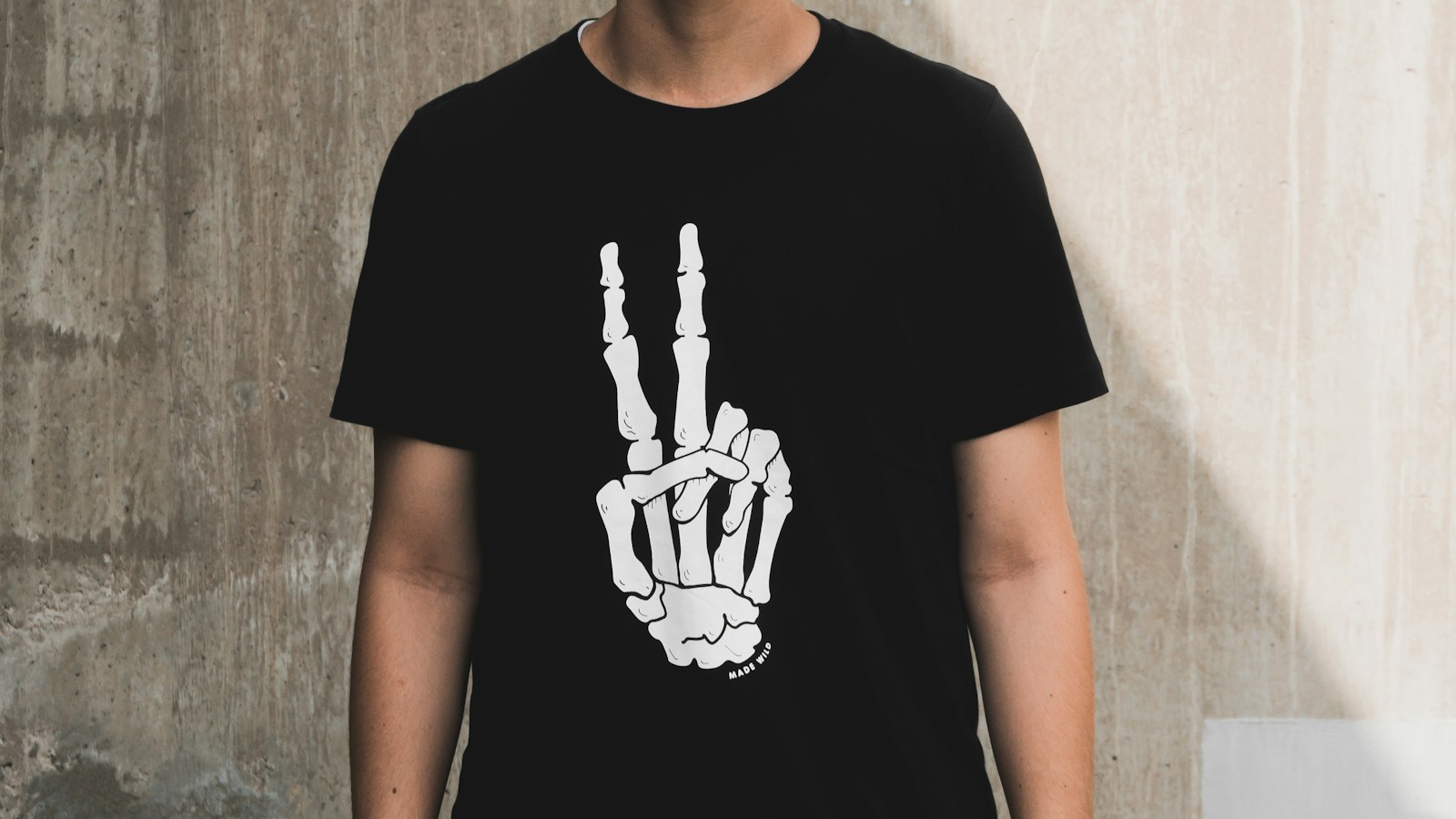

Conscious streetwear is not “perfect ethical fashion.”
It’s not even “I have my life together.”
At its best, conscious streetwear is simpler than that:
It’s wearing something that reflects your values—without turning it into a lecture.
This article is a practical guide to building a values-led wardrobe that still feels like you: wearable, comfortable, a little bold when needed, and not performative.
What conscious streetwear means (in human terms)
Conscious streetwear is streetwear with intention.
That intention can show up as:
- a values-based message (freedom, calm, courage, love)
- a meaningful symbol (used respectfully)
- a commitment to responsible production (described specifically, not vaguely)
- a choice to buy less, but better
- styling choices that align with identity and purpose
It’s not about being “better than other people.” It’s about being a little more awake in your choices.
The 6 building blocks of a values-led wardrobe
1) Choose one core value (not fifteen)
If your wardrobe tries to stand for everything, it usually stands for nothing.
Pick one core value you want to return to this season:
- calm
- freedom
- compassion
- courage
- joy
- justice (values-led, nonviolent)
Then choose one or two pieces that reflect it.
2) Pick messages you’ll still wear on a bad day
The best values-led clothing is “bad-day wearable.”
Ask:
- Would I wear this when I’m tired?
- Would I wear this when I’m stressed?
- Would I wear this to a normal errand?
If the answer is yes, it’s real streetwear—not just “statement clothing for the internet.”
3) Build around comfort (comfort is not shallow)
Comfort is practical. If you’re uncomfortable, your nervous system is busy.
A values-led wardrobe often includes:
- one hoodie that feels like a safety blanket (but cooler)
- one shirt that’s soft enough to actually wear often
- one layer that works for travel
You don’t need 30 “spiritual outfits.” You need a few pieces you return to.
4) Be specific about “responsible”
If you care about production, look for specifics:
- what’s made-to-order vs bulk
- what materials are used
- what a brand means when it says “responsible”
No brand is perfect. But specificity is a good sign.
5) Keep your palette simple
A simple palette makes it easier to wear your values repeatedly.
You can do:
- all black with one message piece
- neutrals + one accent color
- one signature color that feels like you
When your closet is cohesive, you can get dressed without negotiating with yourself for 20 minutes.
6) Let clothing support action, not replace it
This is the key:
Values-led clothing is a reminder, not a substitute.
If you wear “FREEDOM NOW,” it doesn’t mean you’ve “done activism.” It means you’re choosing to remember what matters—then live it with actual actions in your day.
That’s a healthy relationship with message clothing.
FAQs
Is conscious streetwear always expensive?
Not necessarily. You can build it slowly:
- buy fewer pieces
- choose versatile basics
- repeat outfits on purpose
The most conscious thing is often not overbuying.
Is it performative to wear message clothing?
It depends on how you wear it.
If it’s a reminder you live by, and you treat other people with dignity, it’s not performative. It’s expression. If it’s only a costume for appearances, it can feel hollow.
Where does ConsciousBuzz fit in conscious streetwear?
ConsciousBuzz positions itself as spiritual + activism streetwear: wearable message pieces meant to be daily reminders, not preachy billboards. If you want a starting point:
- https://consciousbuzz.com/wardrobe/
- https://consciousbuzz.com/about/
Useful sources and local checks
Final thought
The goal of conscious streetwear isn’t perfection.
It’s alignment: a wardrobe that supports who you are becoming—quietly, consistently, and in real life.
A grounded way to use this guide
For Conscious streetwear: how to build a values-led wardrobe (without preaching), start with meaning before mood. Spiritual clothing works best when it supports a practice you already care about: calm, gratitude, faith, courage, love, abundance, forgiveness, or simply the daily miracle of not replying to nonsense with extra nonsense. A symbol or phrase should feel like a reminder you can live with, not a costume you have to perform.
If you are choosing conscious streetwear, ask what the piece helps you remember. Does the wording steady you? Does the symbol mean something you understand? Does the colour, fit, and fabric suit the days you actually have, not the imaginary week where you meditate at dawn, drink perfect tea, and never misplace your keys? A useful spiritual garment belongs in normal life. It should survive errands, tired mornings, and the occasional existential wobble near the laundry basket.
The buying decision should also stay grounded. Print-on-demand can reduce overproduction and unsold inventory waste because products are made after demand exists, but it is not automatically an environmental guarantee. Materials, print durability, packaging, fulfilment, and repeat wear still matter. For Conscious streetwear: how to build a values-led wardrobe (without preaching), the better question is not whether a product sounds perfectly pure. The better question is whether the claim is clear, the message is respectful, and the piece is something you will wear enough for its meaning to become familiar.
One next step: choose one reminder you want close to your body this month. Maybe it is calm. Maybe it is courage. Maybe it is karma, because you are trying not to become the comment section. Pair that reminder with one small practice: breathe before reacting, walk without your phone, pray, journal, forgive slowly, or speak kindly while still having boundaries. The clothing is not the practice, but it can tap you on the shoulder when the day gets loud.
Reader checklist before you act
Use Conscious streetwear: how to build a values-led wardrobe (without preaching) as a small checklist, not a pressure campaign. First, ask whether the message or symbol is something you understand well enough to explain simply. Second, check whether the product details are specific enough to trust: material notes, fit guidance, print method where available, and care instructions. Third, imagine wearing the piece ten times, not once. Repeat wear is where meaning becomes part of daily life instead of a one-day mood.
For conscious streetwear, the best choice is usually the one that balances feeling and clarity. You want enough emotion to care, but enough restraint to avoid turning the item into a performance. If the message is spiritual, let it support practice. If the message is activist, let it support constructive public conscience. If the message tries to do everything at once, pause. Clothing has limited space, and so does the human nervous system.
A good final move is to pair the piece with one grounded habit. Wear it on a day when you want to remember your values, then do one related thing: read, reflect, volunteer, rest, repair, donate, learn, forgive, or speak with more care. That is how apparel becomes more than a graphic. It becomes a reminder attached to behaviour, and behaviour is where the real story lives. For this particular guide, the useful test is whether the reader can act on it this week. In “Conscious streetwear: how to build a values-led wardrobe (without preaching)”, this point works best when it stays close to the actual reader problem.
A sharper takeaway for readers
The practical value of Conscious streetwear: how to build a values-led wardrobe (without preaching) is in helping the reader choose with more care than a quick scroll usually allows. Look past the first emotional reaction and ask three things: does the message still feel respectful after you sit with it, does the product claim give enough detail to trust, and would you wear it often enough for the idea to become part of your actual life? That last question is underrated. A meaningful piece that never leaves the wardrobe is basically a very folded opinion.
For conscious streetwear, a useful choice should make the reader feel clearer, not morally cornered. Spiritual wording should support practice. Activism wording should support constructive conscience. Conscious clothing language should be careful about production: print-on-demand can reduce overproduction and unsold inventory waste, but materials, fulfilment, shipping, packaging, durability, and repeat wear still shape the real impact. That honesty is not a weakness. It is what keeps the article trustworthy.
If the reader remembers one thing from Conscious streetwear: how to build a values-led wardrobe (without preaching), let it be this: meaning is strongest when it becomes behaviour. Wear the reminder, then live one small part of it. That might mean rest, courage, kindness, civic care, a better buying choice, or simply refusing to turn every disagreement into a personal weather event.
Related guides