
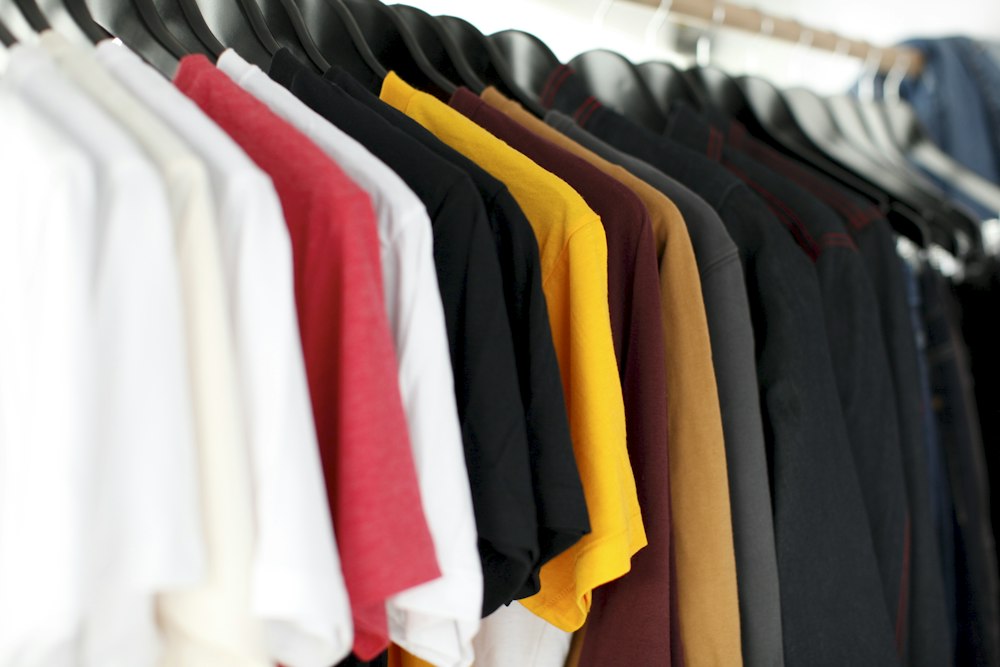
Print-on-demand can reduce the risk of printing a pile of shirts nobody buys. That is a useful, limited advantage. It does not tell you how the blank garment was made, how far your parcel travels, or whether the shirt will survive the way you wash it. If you want to shop with less waste, start by asking which stage of production a claim actually describes.
Picture a small shop offering a design in six colours. Under a bulk-printing model, the seller may have to guess how many finished shirts to order in each size. Under an on-demand model, the decoration follows an order. The second approach can avoid some unwanted finished stock. Neither approach makes a purchase necessary, and neither guarantees a smaller overall environmental footprint for every individual item.
What is made after you place an order?
Printful describes print-on-demand as a model in which custom products are created after purchase. This is a supplier's explanation of its service, not independent evidence that a particular ConsciousBuzz garment is environmentally preferable. Keep those two questions separate when reading a product page.
A useful question for the retailer is whether the garment itself is cut and sewn after ordering, or an existing blank receives a print. “Made to order” can leave that distinction unclear. Ask what is actually delayed until your purchase: decoration, assembly, or the entire garment. The answer gives the production claim a boundary you can understand.
Also ask what happens when a print fails inspection. Is the item reworked, donated when suitable, or discarded? You may not get a detailed answer, but the question is more informative than asking whether the company is “good for the planet.” A broad label encourages a broad reply. A question about a real process is harder to answer with a slogan.

Unsold inventory is one part of the waste question
Avoiding unwanted finished inventory is different from eliminating all waste. Fabric offcuts, packaging, damaged products and garments that buyers never wear are separate issues. You do not need a complete industrial investigation before buying a T-shirt, but you should resist allowing one appealing production feature to answer every other question.
Imagine ordering a shirt because a limited-time banner says the design will disappear tonight. It arrives, the neckline feels wrong, and it stays behind the towels. Printing only after your order has not solved that mismatch. From your side of the transaction, the most useful intervention was checking the neckline and measurements before pressing the payment button.
For a wider approach to a wardrobe you already own, see lower-waste clothing choices without greenwashing. That guide starts with use, repair and restraint, rather than treating a production model as a reason to replace perfectly serviceable clothes.
Read the environmental claim word by word
The US Federal Trade Commission's Green Guides summary warns marketers against broad, unqualified claims such as “green” and “eco-friendly.” It recommends specific, clearly qualified benefits. For shoppers, that is a helpful reading habit even when a seller operates outside the United States; it is not a substitute for local consumer law.
If a page says “recycled packaging,” look for what that statement covers. It may describe the mailer rather than the shirt. If it says “organic,” look for the fibre percentage, the relevant certification and whether it applies to the exact item. A badge at the bottom of a website should not be treated as proof about every product in the catalogue.
Be equally careful with comparisons. “Less waste” leaves a missing second half: less than what? A named process, stated baseline and explained limitation are more useful than a leaf icon. If the retailer cannot provide those details, treat the environmental claim as unverified and make your decision on information you can actually assess.
Check the garment before the production story
Lay a shirt you enjoy wearing flat and measure it using the retailer's method. Compare chest width, body length and sleeve length rather than transferring a familiar letter size between brands. If measurements are missing, ask for them. A photograph cannot reliably tell you whether a shoulder seam will sit where you want it.
Read the fibre composition and care instructions together. A fabric you like may still be unsuitable for your routine if it needs care you cannot provide. If you use shared laundry facilities, consider that practical constraint before buying. The question is whether the garment can live in your actual home, not whether you could maintain an imaginary perfect laundry routine.
Look closely at the print placement and its scale on the selected size. Product images may be mockups. Ask for a photograph of a finished item when texture or print detail matters to you. Do not infer durability from a crisp digital preview. Our conscious clothing brand checklist offers a fuller list of questions for comparing product pages.
Shipping and returns deserve their own check
Find the estimated production time and the estimated delivery time. They are different parts of the wait. If the shirt is for a dated event, build in room for a delay or choose something already available locally. An on-demand item is a poor match for a deadline you cannot move unless the seller can meet it reliably.
Check where the selected item is expected to ship from, whether an order may arrive in separate parcels, and who pays for a return. Do not assume that a company's headquarters is the dispatch location. Equally, do not calculate a carbon saving from distance alone. Transport mode, parcel handling and other inputs would be needed for a defensible comparison.
Read the policy for an incorrect size separately from the policy for a damaged or misprinted item. Retail policies and statutory rights are not always the same thing. If the wording is confusing, ask the seller to explain the specific situation before buying; for a dispute, consult the relevant consumer authority in your country.
Make the decision against your existing wardrobe
Before adding a new piece, name the job it will do. Perhaps you need a warmer layer for an evening walk, or a replacement for a shirt whose fabric has worn through. A specific use helps you compare a new purchase with repair, borrowing or a secondhand option. “I like the idea of it” is honest, but it is a different reason.
Try a short wardrobe check. Find two bottoms and one outer layer you would wear with the proposed item. Notice whether the colour and shape add a useful combination or demand further purchases. If the new shirt needs a new jacket and different shoes before it feels wearable, pause and reconsider the whole cost.
The EPA's waste guidance includes repairing worn clothing rather than disposing of it. You can apply that principle without buying a repair kit immediately: ask a local alteration service about a loose seam, replace a missing button, or learn the one small repair your favourite garment currently needs.
A sensible final check before ordering
Write down the product, its intended use, the measurements you checked and any unanswered question. If the unresolved point would change your purchase, wait for an answer. If it would not, acknowledge that limitation instead of filling it with an optimistic assumption. This makes the decision less vulnerable to a persuasive production story.
When browsing the ConsciousBuzz wardrobe, evaluate each item on its own description. This article does not certify any product's materials, supplier or environmental impact. A meaningful design can be a good reason to enjoy a garment, but it should sit alongside fit, usefulness and accurate information.
The practical aim is a shirt you want to wear repeatedly, with a production claim you can explain plainly. On-demand printing may help with unsold finished stock. Your choice of garment, the questions you ask and the care you can realistically give it still matter after that benefit has been counted.