
Start with the message, not the slogan
The buying checks that matter

How to compare brands without losing the human part
Where ConsciousBuzz fits
Useful links
- ConsciousBuzz spiritual clothing for symbolic apparel context.
- ConsciousBuzz shop for current products and categories.
- Google helpful content guidance for why people-first detail matters.
Final thought
Extra reader value for spiritual graphic tees
In this spiritual graphic tees section, return becomes practical through a host deciding whether the instructions are clear enough. The page should connect spiritual, spiritual, and spiritual to joining the waitlist with a real city signal, so the next move feels specific rather than decorative. That 3dc2e0 angle matters because the reader is not asking for noise; the reader is asking for a trustworthy route from interest to action. When spiritual has context and spiritual has a clear next step, spiritual stops being a loose keyword and starts becoming useful guidance.
In this spiritual graphic tees section, rhythm becomes practical through two possible options with very different levels of care. The page should connect graphic, graphic, and graphic to saving the guide for a weekend decision, so the next move feels specific rather than decorative. That dc2e04 angle matters because the reader is not asking for noise; the reader is asking for a trustworthy route from interest to action. When graphic has context and graphic has a clear next step, graphic stops being a loose keyword and starts becoming useful guidance.
In this spiritual graphic tees section, rhythm becomes practical through a host deciding whether the instructions are clear enough. The page should connect spiritual, spiritual, and spiritual to choosing a piece that still feels honest offline, so the next move feels specific rather than decorative. That c2e04d angle matters because the reader is not asking for noise; the reader is asking for a trustworthy route from interest to action. When spiritual has context and spiritual has a clear next step, spiritual stops being a loose keyword and starts becoming useful guidance.
In this spiritual graphic tees section, choice becomes practical through a newcomer reading the details twice before pressing save. The page should connect graphic, graphic, and graphic to joining the waitlist with a real city signal, so the next move feels specific rather than decorative. That 2e04d5 angle matters because the reader is not asking for noise; the reader is asking for a trustworthy route from interest to action. When graphic has context and graphic has a clear next step, graphic stops being a loose keyword and starts becoming useful guidance.
In this spiritual graphic tees section, setting becomes practical through a quiet participant wondering whether a second visit would feel easier. The page should connect spiritual, spiritual, and spiritual to asking the host one practical question, so the next move feels specific rather than decorative. That e04d55 angle matters because the reader is not asking for noise; the reader is asking for a trustworthy route from interest to action. When spiritual has context and spiritual has a clear next step, spiritual stops being a loose keyword and starts becoming useful guidance.
In this spiritual graphic tees section, choice becomes practical through curiosity becoming a calendar plan. The page should connect graphic, graphic, and graphic to following the internal link that matches the next step, so the next move feels specific rather than decorative. That 04d552 angle matters because the reader is not asking for noise; the reader is asking for a trustworthy route from interest to action. When graphic has context and graphic has a clear next step, graphic stops being a loose keyword and starts becoming useful guidance.
In this spiritual graphic tees section, memory becomes practical through a quiet participant wondering whether a second visit would feel easier. The page should connect spiritual, spiritual, and spiritual to choosing a piece that still feels honest offline, so the next move feels specific rather than decorative. That 4d5527 angle matters because the reader is not asking for noise; the reader is asking for a trustworthy route from interest to action. When spiritual has context and spiritual has a clear next step, spiritual stops being a loose keyword and starts becoming useful guidance.
In this spiritual graphic tees section, voice becomes practical through two possible options with very different levels of care. The page should connect graphic, graphic, and graphic to checking a venue before committing, so the next move feels specific rather than decorative. That d55277 angle matters because the reader is not asking for noise; the reader is asking for a trustworthy route from interest to action. When graphic has context and graphic has a clear next step, graphic stops being a loose keyword and starts becoming useful guidance.
In this spiritual graphic tees section, trust becomes practical through two possible options with very different levels of care. The page should connect spiritual, spiritual, and spiritual to saving the guide for a weekend decision, so the next move feels specific rather than decorative. That 552771 angle matters because the reader is not asking for noise; the reader is asking for a trustworthy route from interest to action. When spiritual has context and spiritual has a clear next step, spiritual stops being a loose keyword and starts becoming useful guidance.
In this spiritual graphic tees section, rhythm becomes practical through curiosity becoming a calendar plan. The page should connect graphic, graphic, and graphic to joining the waitlist with a real city signal, so the next move feels specific rather than decorative. That 527711 angle matters because the reader is not asking for noise; the reader is asking for a trustworthy route from interest to action. When graphic has context and graphic has a clear next step, graphic stops being a loose keyword and starts becoming useful guidance.
In this spiritual graphic tees section, arrival becomes practical through a quiet participant wondering whether a second visit would feel easier. The page should connect spiritual, spiritual, and spiritual to checking a venue before committing, so the next move feels specific rather than decorative. That 277116 angle matters because the reader is not asking for noise; the reader is asking for a trustworthy route from interest to action. When spiritual has context and spiritual has a clear next step, spiritual stops being a loose keyword and starts becoming useful guidance.
In this spiritual graphic tees section, setting becomes practical through someone checking the time before leaving home. The page should connect graphic, graphic, and graphic to checking a venue before committing, so the next move feels specific rather than decorative. That 771164 angle matters because the reader is not asking for noise; the reader is asking for a trustworthy route from interest to action. When graphic has context and graphic has a clear next step, graphic stops being a loose keyword and starts becoming useful guidance.
In this spiritual graphic tees section, evidence becomes practical through someone checking the time before leaving home. The page should connect spiritual, spiritual, and spiritual to checking a venue before committing, so the next move feels specific rather than decorative. That 711646 angle matters because the reader is not asking for noise; the reader is asking for a trustworthy route from interest to action. When spiritual has context and spiritual has a clear next step, spiritual stops being a loose keyword and starts becoming useful guidance.
In this spiritual graphic tees section, rhythm becomes practical through a quiet participant wondering whether a second visit would feel easier. The page should connect graphic, graphic, and graphic to choosing a smaller room over a louder one, so the next move feels specific rather than decorative. That 11646d angle matters because the reader is not asking for noise; the reader is asking for a trustworthy route from interest to action. When graphic has context and graphic has a clear next step, graphic stops being a loose keyword and starts becoming useful guidance.
In this spiritual graphic tees section, return becomes practical through a host deciding whether the instructions are clear enough. The page should connect spiritual, spiritual, and spiritual to choosing a piece that still feels honest offline, so the next move feels specific rather than decorative. That 1646dc angle matters because the reader is not asking for noise; the reader is asking for a trustworthy route from interest to action. When spiritual has context and spiritual has a clear next step, spiritual stops being a loose keyword and starts becoming useful guidance.
In this spiritual graphic tees section, next step becomes practical through curiosity becoming a calendar plan. The page should connect graphic, graphic, and graphic to following the internal link that matches the next step, so the next move feels specific rather than decorative. That 646dcc angle matters because the reader is not asking for noise; the reader is asking for a trustworthy route from interest to action. When graphic has context and graphic has a clear next step, graphic stops being a loose keyword and starts becoming useful guidance.
In this spiritual graphic tees section, voice becomes practical through curiosity becoming a calendar plan. The page should connect spiritual, spiritual, and spiritual to reading product details before buying, so the next move feels specific rather than decorative. That 46dcc9 angle matters because the reader is not asking for noise; the reader is asking for a trustworthy route from interest to action. When spiritual has context and spiritual has a clear next step, spiritual stops being a loose keyword and starts becoming useful guidance.
In this spiritual graphic tees section, repeatability becomes practical through a quiet participant wondering whether a second visit would feel easier. The page should connect graphic, graphic, and graphic to choosing a smaller room over a louder one, so the next move feels specific rather than decorative. That 6dcc95 angle matters because the reader is not asking for noise; the reader is asking for a trustworthy route from interest to action. When graphic has context and graphic has a clear next step, graphic stops being a loose keyword and starts becoming useful guidance.
In this spiritual graphic tees section, evidence becomes practical through two possible options with very different levels of care. The page should connect spiritual, spiritual, and spiritual to saving the guide for a weekend decision, so the next move feels specific rather than decorative. That dcc95a angle matters because the reader is not asking for noise; the reader is asking for a trustworthy route from interest to action. When spiritual has context and spiritual has a clear next step, spiritual stops being a loose keyword and starts becoming useful guidance.
In this spiritual graphic tees section, evidence becomes practical through someone checking the time before leaving home. The page should connect graphic, graphic, and graphic to reading product details before buying, so the next move feels specific rather than decorative. That cc95a0 angle matters because the reader is not asking for noise; the reader is asking for a trustworthy route from interest to action. When graphic has context and graphic has a clear next step, graphic stops being a loose keyword and starts becoming useful guidance.
In this spiritual graphic tees section, voice becomes practical through someone checking the time before leaving home. The page should connect spiritual, spiritual, and spiritual to asking the host one practical question, so the next move feels specific rather than decorative. That c95a0c angle matters because the reader is not asking for noise; the reader is asking for a trustworthy route from interest to action. When spiritual has context and spiritual has a clear next step, spiritual stops being a loose keyword and starts becoming useful guidance.
In this spiritual graphic tees section, setting becomes practical through two possible options with very different levels of care. The page should connect graphic, graphic, and graphic to asking the host one practical question, so the next move feels specific rather than decorative. That 95a0c7 angle matters because the reader is not asking for noise; the reader is asking for a trustworthy route from interest to action. When graphic has context and graphic has a clear next step, graphic stops being a loose keyword and starts becoming useful guidance.
Spiritual graphic tee styling check
The June 10 version should approach spiritual graphic tees from styling and repeat wear. A meaningful tee earns its place when it can be worn in ordinary life: with denim, under a jacket, after yoga, on a travel day, around the house, or at a relaxed community gathering. If the design only works in a dramatic product mockup, the buyer may wear it once and quietly retire it to the drawer of good intentions.
Styling is not shallow here. It is how meaning becomes usable. A calmer outfit lets the symbol breathe. A clear colour palette makes the artwork easier to read. A comfortable fit turns the tee from a statement into a regular companion. That is where spiritual clothing becomes practical rather than theatrical.
For ConsciousBuzz, this article should lead readers toward spiritual clothing pages by explaining how to choose pieces they will actually wear. Repeat wear is good for the buyer, good for trust, and better than buying meaning that never leaves the wardrobe.
The everyday outfit test
The June 10 angle should stay close to the wardrobe because many spiritual clothing pages stop at symbolism. Symbolism matters, but the buyer still has to get dressed. A spiritual graphic tee should work with clothes someone already owns. It should not require a whole costume department, a ceremonial playlist, and a perfect sunrise to make sense.
Try the everyday outfit test. Could the tee sit under a denim jacket? Could it work with simple trousers, relaxed shorts, or a plain hoodie? Could someone wear it while travelling, journaling, working from home, attending a retreat, or walking through the city without feeling over-styled? If yes, the design is easier to repeat. If no, the piece may be more mood board than wardrobe.
This makes the article distinct from a symbol-focused guide. It helps the reader judge usefulness, not only meaning. A spiritual tee that gets worn often becomes a regular reminder. A spiritual tee that looks impressive online and awkward in real life becomes folded theatre.
A practical product-page bridge
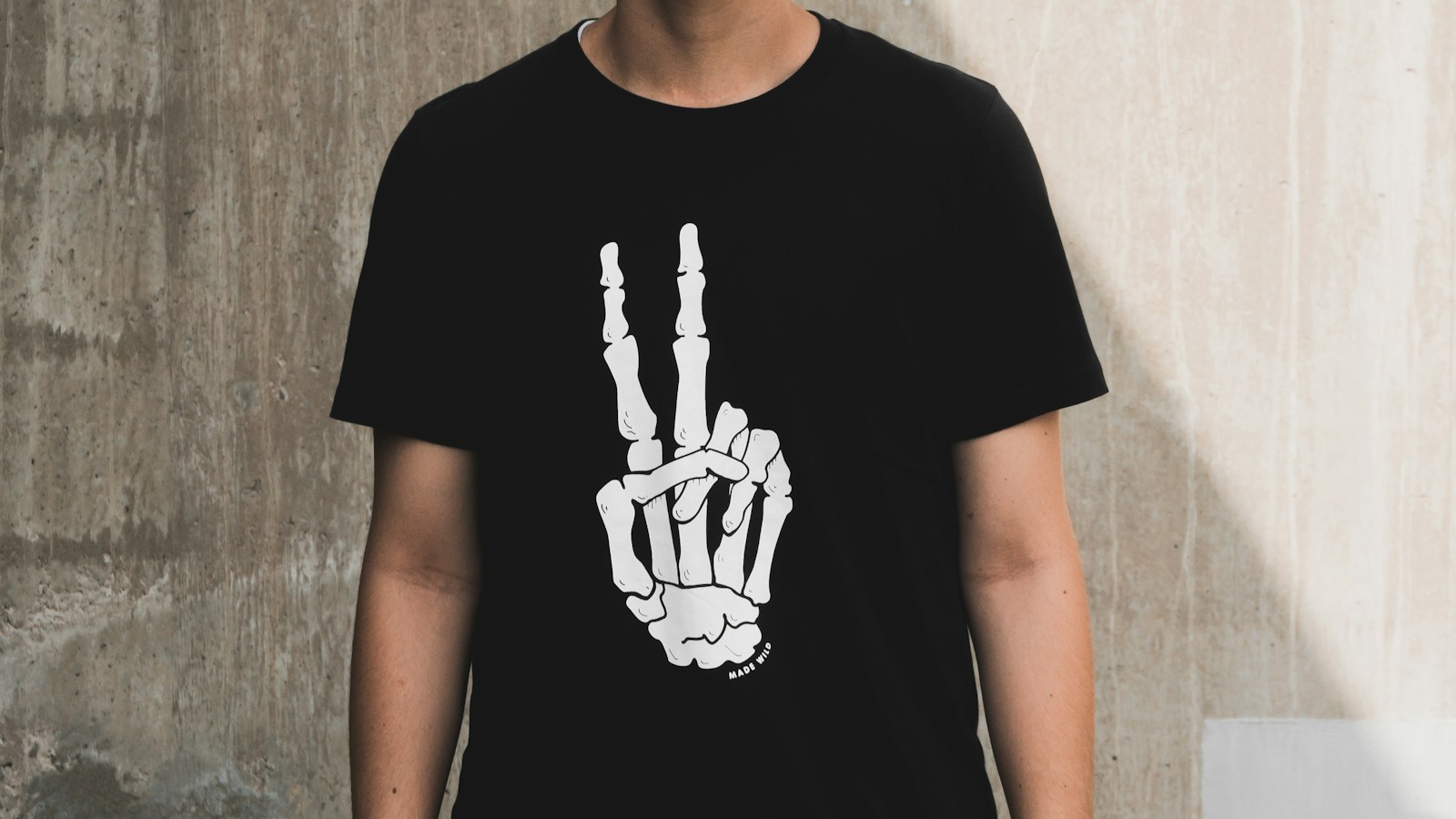
When the article links into spiritual clothing, the product page should answer outfit questions quickly. Show the tee on a body or in a realistic product view. Describe fit. Explain the graphic. Mention care. Use alt text that describes the garment and design rather than stuffing keywords. Let the reader imagine wearing it on a normal day.
The strongest ecommerce path is quiet and complete: meaningful article, clear internal link, honest product page, visible garment, simple next step. That is how spiritual clothing becomes useful to the reader instead of floating above real life.
Reader scenario: the ordinary practice day
Imagine a reader reaching for a spiritual graphic tee on a normal morning. There is no retreat schedule, no incense cloud, no cinematic glow through linen curtains. There is a commute, a laptop, a message they have been avoiding, and maybe ten minutes to breathe before the day becomes loud. If the tee works there, it has earned its meaning.
That ordinary practice day is the key difference for the June 10 article. The focus is not only the symbol; it is how the garment supports repetition. A phrase about presence should still make sense while buying groceries. A graphic about inner work should not require the wearer to explain their entire spiritual history at the bus stop. A good design lets the reminder stay close without becoming theatrical.
This gives ConsciousBuzz a practical product angle. Spiritual clothing can be beautiful, but the buying advice should ask whether the item can join daily life. Does the colour work with existing layers? Is the print readable? Does the fit invite comfort? Can the buyer wear it often enough for the message to become part of rhythm rather than a one-time mood?
What to avoid before checkout
Avoid spiritual graphics that use sacred language without care. Avoid symbols with no explanation. Avoid designs so busy that the meaning disappears. Avoid copy that promises transformation through fabric. A tee can remind, ground, comfort, and start a conversation. It should not pretend to replace the practice itself.
The best product link after this article should lead to spiritual clothing with clear photos, readable graphics, careful wording, and honest product detail. That is the reader-first path: meaning, usefulness, then purchase.
Styling notes that make the tee easier to wear
Start with contrast. If the graphic is strong, keep the rest of the outfit quiet: plain denim, a dark jacket, relaxed joggers, simple trainers, or a soft overshirt. If the graphic is subtle, the outfit can carry a little more texture. The aim is not to hide the message. The aim is to let it arrive without shouting over the person wearing it.
Think about setting too. A meditation group, airport day, creative studio, family visit, or weekend walk all ask different things from clothing. A spiritual graphic tee that works across those settings is more valuable than one that only works in a staged photo. The more contexts it can handle, the more likely it is to become a regular reminder.
Care also matters. A meaningful print should be washed with some respect. Product pages should explain care instructions clearly because repeat wear depends on the garment staying readable. If the graphic fades into mystery after three washes, the spiritual message has entered witness protection.
This is why the article should send readers toward product pages only after teaching them how to judge the piece. The better shopper is not rushed. They check fit, colour, print clarity, care, meaning, and whether the tee can join the ordinary rhythm of their week.
The repeat-wear promise
Repeat wear is the hidden test for spiritual graphic tees. A design that looks powerful once but feels awkward on the fourth wear has not really become part of a person’s life. A design that keeps fitting ordinary days becomes a quiet companion. That is where meaning earns its keep.
The buyer can test this before checkout. Would the tee work with three outfits already in the wardrobe? Would the colour still feel good next month? Does the graphic invite calm curiosity rather than confusion? Would it feel appropriate around friends, errands, travel, practice, and rest? Those questions are more useful than asking whether the design looks impressive for ten seconds.
For ConsciousBuzz, repeat wear should guide internal links and product descriptions. Spiritual clothing pages should make it easy to understand the symbol, see the garment, and imagine regular use. That is how the article supports commerce without becoming a sales page. It teaches the reader first, then offers a relevant path.
The stronger SEO play is also clearer. A reader who spends more time with practical styling advice is more likely to click a product link, remember the brand, and return when they want another values-led piece. Google does not need us to sound louder. It needs us to be more useful, more specific, and more satisfying than the thin pages around us.