
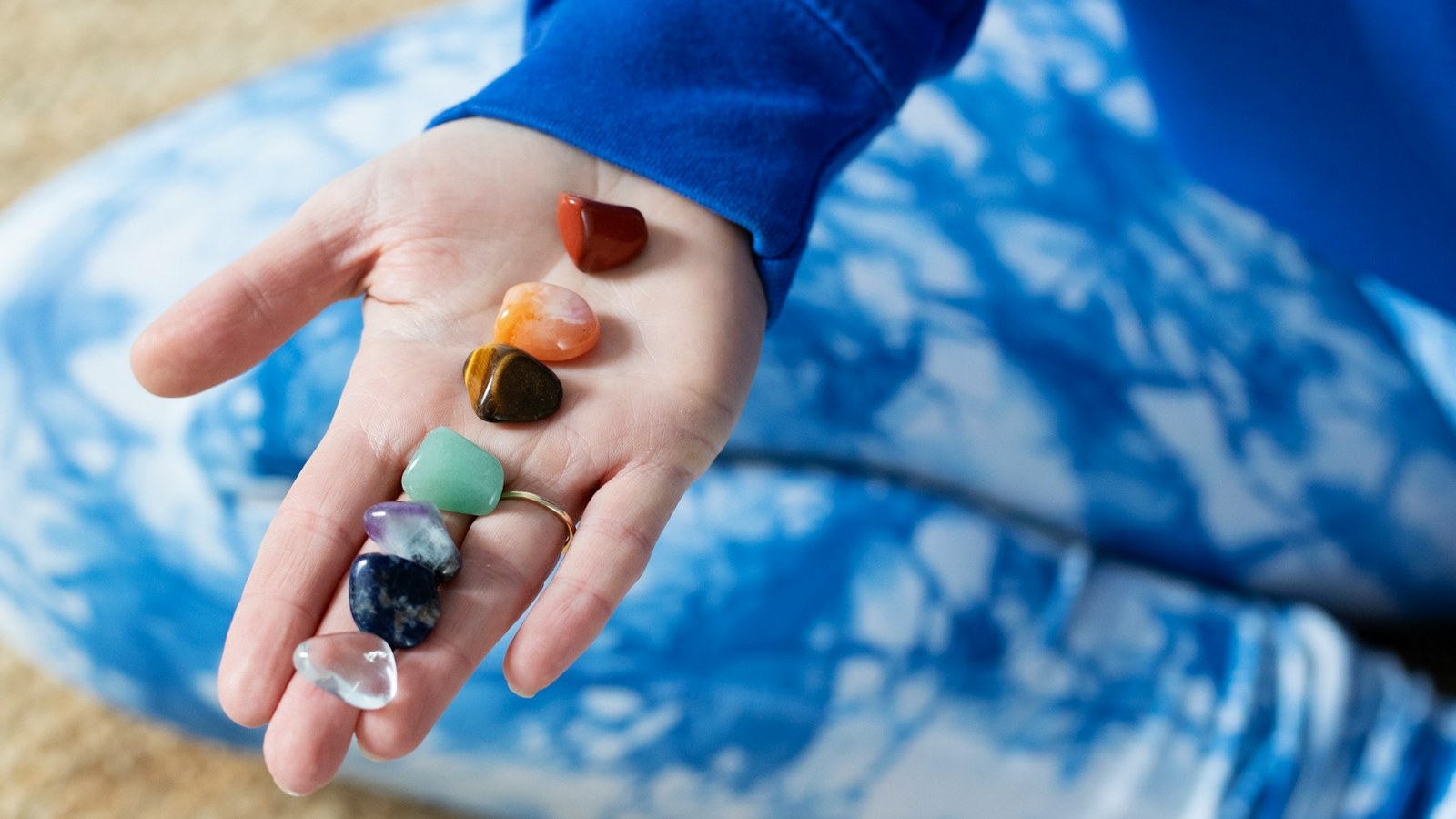
Chakra colors are one of the most common “quiet spiritual languages” people use in daily life.
Sometimes it’s deep. Sometimes it’s simple. Sometimes it’s just: I need calm today, so I’m wearing blue.

If you’re curious about chakra colors and spiritual clothing, this guide gives you a grounded, beginner-friendly way to use color with intention—without turning it into superstition, a costume, or a personality contest. People often search chakra colors clothing when they want a simple bridge between inner practice and everyday style: not a rulebook, just a more conscious way to choose what goes on the body.
Important note: chakra color symbolism is a spiritual tradition and a modern practice for many people. It’s not a medical system, and colors don’t “cure” anything. Use this as reflection and self-expression, not diagnosis.
What chakra colors mean (the simple version)
Different lineages and teachers describe chakras in slightly different ways, but the modern color associations often follow this pattern:
- Red (root): grounding, safety, stability, “I’m here.”
- Orange (sacral): creativity, pleasure, emotion, flow.
- Yellow (solar plexus): confidence, will, self-worth.
- Green (heart): compassion, connection, forgiveness.
- Blue (throat): communication, truth, self-expression.
- Indigo (third eye): intuition, insight, inner knowing.
- Violet / white (crown): spirituality, meaning, “bigger than me.”
You don’t need to believe any of this like it’s a physics equation. Color works because it affects mood, memory, and identity. When you attach meaning to a color, it becomes a daily cue.
How spiritual clothing fits in (without being cringe)
Spiritual clothing isn’t “wearing spirituality.” It’s wearing a reminder.
Think of it like:
- a note to yourself
- a symbol you want to live into
- a gentle prompt to act like the person you’re trying to become
The difference between meaningful and performative is usually:
- intention
- humility
- consistency
If your outfit is a reminder to practice patience, but you’re rude to everyone all day… the outfit isn’t the issue. The reminder just hasn’t landed yet.
Chakra color outfits: practical ways to start
You don’t need a full monochrome “chakra costume.” Start small.
Here are ways people use chakra colors in clothing:
Option 1: One “anchor” item
Choose one piece:
- a t-shirt
- a hoodie
- a scarf
- a hat
- socks (quiet but powerful, honestly)
Then keep the rest neutral.
Option 2: Color near the body vs far from the body
Some people like:
- color near the body (shirt, base layer) as a private reminder
- color as an outer layer (jacket, scarf) as a social signal
Neither is better. It’s about what feels authentic for you.
Option 3: Color by context
- Workday: subtle blues/greens for calm and clarity.
- Creative day: orange/yellow accents.
- Social day: green for warmth and openness.
- “I need to feel steady” day: red (even as a small accent).
A quick color-by-color guide (with intention prompts)
Red (root)
Good for: days you feel scattered, anxious, or ungrounded.
Try:
- red as a small accent (cap, shoes, scarf)
- earth tones (brown, rust) if bright red feels too loud
Intention prompt: “Today, I move slowly enough to stay with myself.”
Orange (sacral)
Good for: creativity, social warmth, getting unstuck.
Try:
- orange/peach layers
- warm patterns
Prompt: “I allow myself to feel, create, and enjoy.”
Yellow (solar plexus)
Good for: confidence, boundaries, showing up.
Try:
- yellow accessories or a statement tee
- gold jewelry if you prefer subtle
Prompt: “I trust my choices.”
Green (heart)
Good for: compassion, connection, softness.
Try:
- green layers
- nature tones (olive, forest)
Prompt: “I choose warmth without losing my spine.”
Blue (throat)
Good for: clear communication, honesty, calming your nervous system.
Try:
- blue tops (near the voice/throat area is a nice symbolic fit)
- denim as an everyday “blue practice”
Prompt: “I speak with truth and kindness.”
Indigo (third eye)
Good for: reflection, intuition, journaling days.
Try:
- darker tones, quiet layers
- navy/indigo accessories
Prompt: “I listen before I decide.”
Violet / white (crown)
Good for: spiritual practice, meaning, perspective.
Try:
- simple, clean looks
- violet accents for a more mystical feel
Prompt: “I remember what matters.”
Using chakra colors respectfully (and avoiding “spiritual cosplay”)
Two simple rules help:
1) Don’t pretend your outfit makes you enlightened. 2) Don’t borrow sacred symbols you don’t understand.
Color is generally the safest, most universal entry point. If you want to wear specific spiritual symbols, take time to learn their context and treat them with respect.
If you want a simple weekly practice
Try a “one color per day” experiment for a week:
- Monday: blue (clear communication)
- Tuesday: green (warmth + connection)
- Wednesday: yellow (confidence)
- Thursday: red (grounding)
- Friday: orange (play)
- Weekend: indigo/violet/white (reflection + reset)
Keep a tiny note: “What changed in my mood when I dressed this way?” That’s your data.
How to combine chakra colors (without looking like a highlighter)
If full-color outfits feel like “too much,” use calmer combinations:
- One bright + neutrals: one chakra color as the anchor, everything else muted.
- Two-tone pairing: green + blue (heart + throat), yellow + orange (confidence + creativity).
- Same color family: navy/indigo instead of bright indigo; olive instead of bright green.
Practical trick: choose one “intention” color and let the rest of your outfit support it instead of competing with it.
Buying intentionally (without moral panic)
If your spiritual practice includes “live with care,” it’s normal to think about how clothing is made.
You don’t have to be perfect to be intentional. A few grounded questions help:
- Will I actually wear this often?
- Can I style it with what I already own?
- Do I understand the message/symbol (if there is one)?
- Am I buying this as a reminder… or as a substitute for a practice?
If a piece is made after purchase (print-on-demand), it can reduce overproduction and unsold inventory waste, but materials and fulfillment vary by product and supplier. Treat “sustainable” as something to investigate, not a magic label.
Quick FAQ
Do chakra colors have to match exactly?
No. Use the vibe. A deep forest green and a bright mint green can both feel “heart” to different people.
What if I don’t believe in chakras?
You can still use the practice. Color symbolism works as psychology and personal ritual even if you treat chakras as metaphor.
Is spiritual clothing supposed to look a certain way?
No. The “right” look is the one that feels honest on you. Simple, streetwear, minimal, colorful—whatever helps you remember your intention.
Continue exploring ConsciousBuzz
- Spiritual clothing hub: https://consciousbuzz.com/spiritual-clothing/
- About (brand story): https://consciousbuzz.com/about/
A gentle next step
Choose one color you want more of in your life this week and wear it intentionally at least twice.
If you’re exploring spiritual clothing more broadly, start here: https://consciousbuzz.com/spiritual-clothing/
A grounded way to use this guide
For Chakra colors and spiritual clothing: how to dress with intention, start with meaning before mood. Spiritual clothing works best when it supports a practice you already care about: calm, gratitude, faith, courage, love, abundance, forgiveness, or simply the daily miracle of not replying to nonsense with extra nonsense. A symbol or phrase should feel like a reminder you can live with, not a costume you have to perform.
If you are choosing spiritual clothing, ask what the piece helps you remember. Does the wording steady you? Does the symbol mean something you understand? Does the colour, fit, and fabric suit the days you actually have, not the imaginary week where you meditate at dawn, drink perfect tea, and never misplace your keys? A useful spiritual garment belongs in normal life. It should survive errands, tired mornings, and the occasional existential wobble near the laundry basket. This keeps the guidance tied to “Chakra colors and spiritual clothing: how to dress with intention” instead of drifting into a generic checklist.
The buying decision should also stay grounded. Print-on-demand can reduce overproduction and unsold inventory waste because products are made after demand exists, but it is not automatically an environmental guarantee. Materials, print durability, packaging, fulfilment, and repeat wear still matter. For Chakra colors and spiritual clothing: how to dress with intention, the better question is not whether a product sounds perfectly pure. The better question is whether the claim is clear, the message is respectful, and the piece is something you will wear enough for its meaning to become familiar.
One next step: choose one reminder you want close to your body this month. Maybe it is calm. Maybe it is courage. Maybe it is karma, because you are trying not to become the comment section. Pair that reminder with one small practice: breathe before reacting, walk without your phone, pray, journal, forgive slowly, or speak kindly while still having boundaries. The clothing is not the practice, but it can tap you on the shoulder when the day gets loud. For “Chakra colors and spiritual clothing: how to dress with intention”, that small distinction is what makes the advice usable rather than decorative.
Useful sources and local checks
Before joining or hosting, confirm current opening times, route details, group rules, and booking requirements. These sources are useful starting points:
Final thought
The best approach to chakra colors clothing is not to hunt for the perfect group. Start with one clear, beginner-friendly option, notice how it feels, and repeat the parts that make you want to come back. Real community usually begins with a small plan that is easy enough to do again.